Why the right material decides your bulk order’s success
If you’re buying logo keychains bulk, the material is not a small detail—it decides how the keychain feels, how long it lasts, and whether your brand looks premium or forgettable. At Best Patches, we see this every week: teams come in asking for the cheapest option, then realize the wrong material can lead to scratches, fading, bending, or a design that feels too flimsy to represent the brand.
The challenge is simple but expensive. Bulk orders amplify every choice, so one weak finish or poor substrate can turn 500 giveaways into 500 complaints. If your keychains are going into trade show bags, retail packaging, or employee welcome kits, they need to survive shipping, handling, pockets, and daily wear without looking tired.
Logo keychains bulk refers to large-quantity custom keychain orders made with a branded logo, usually for promotions, retail resale, events, or internal company use. The best bulk material balances durability, print clarity, production cost, and brand fit. In practice, that means choosing a base that can hold detail, resist damage, and still make your logo look sharp after repeated use.
Best Patches helps clients match material to use case, not just price point. That approach matters more in 2026, when buyers expect both visual quality and responsible sourcing.
Table of Contents
- Metal keychains
- Acrylic keychains
- PVC and soft rubber keychains
- Leather and faux leather keychains
- Wood and bamboo keychains
- How to choose the right material for bulk orders
- Material comparison for real business scenarios
- Common mistakes and hidden risks
- Best Patches bulk order case studies
- What buyers care about in 2026
Metal keychains: the premium durability standard
Metal is still the safest choice when your priority is long-term durability and a polished brand feel. Zinc alloy, stainless steel, and iron-backed designs can take abuse that would crush lighter materials. They also pair well with engraving, enamel fill, and debossed logos, which gives them a higher perceived value in corporate gifting and retail packaging.
The real strength of metal is consistency. Bulk buyers hate surprises, and metal keychains are easier to standardize across large runs than many hand-finished options. According to a 2024 Gartner supply chain survey, brands continue to favor suppliers that reduce quality variance and rework, because inconsistency is more expensive than a slightly higher unit cost.
Best uses for metal
- Executive gifts
- Automotive promotions
- Hotel and hospitality branding
- High-end retail add-ons
- Employee milestone gifts
There is a tradeoff. Metal can be heavier, which matters if your design is large or the user carries several keys. It can also scratch surfaces if the finish is not properly coated. For bulk orders, ask about electroplating quality, anti-tarnish coating, and ring strength before you approve production.
“When a logo needs to look expensive on day one and still look good six months later, metal is usually the first material we test,” says a Best Patches production specialist.
Acrylic keychains: sharp artwork and strong value
Acrylic works well when your logo depends on color, contrast, or a clean printed edge. It is lightweight, budget-friendly, and especially useful for artist merch, campus promotions, and event giveaways. In bulk, acrylic lets you keep costs controlled while still delivering a bright, modern look.
Its biggest advantage is design flexibility. You can use clear acrylic, frosted acrylic, layered cutouts, or double-sided printing. For brands that lean youthful or visual, acrylic often outperforms metal because it shows more detail and more color without increasing cost too much.
Still, acrylic is not indestructible. It can crack if dropped on a hard surface, and thin pieces may curl or scuff if packaging is careless. For bulk orders, ask your supplier about thickness, edge polishing, and whether the print is UV-cured or laminated for added protection.
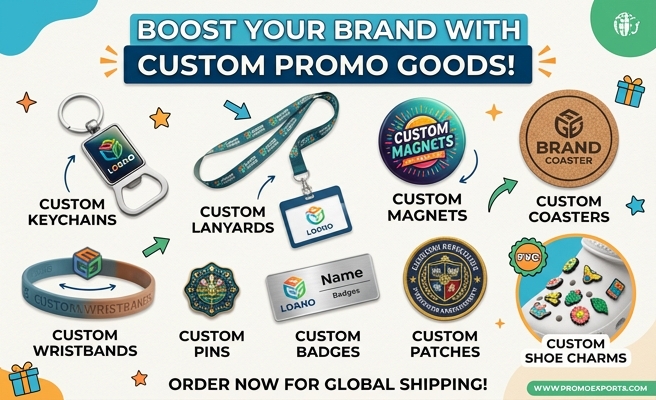
PVC and soft rubber keychains: built for bold branding
PVC and soft rubber keychains are ideal when your design needs shape, depth, and a tactile feel. They are flexible, forgiving, and strong enough for daily use. For sports teams, mascots, youth brands, and playful product lines, this material offers a durable way to create dimensional logos without the cost of metal tooling.
Industry data also supports the demand for tactile branded items. PwC’s 2024 consumer insights research showed that buyers continue to reward brands that feel distinctive and useful, especially when the item is part of a memorable unboxing or event experience. Soft rubber keychains fit that pattern because they are easy to handle and hard to ignore.
The limitation is detail and precision. Very small type, fine gradients, and ultra-clean corporate marks may not translate well in molded PVC. If your brand identity depends on sharp edges and exact typography, test a sample before committing to a large run.
“PVC is the right answer when the design should feel like a mini product, not just a flat tag,” notes a Best Patches account manager who handles sports and retail bulk orders.
Leather and faux leather keychains: subtle, professional, and giftable
Leather and faux leather keychains are the quiet luxury option. They do not scream for attention, but they communicate taste, restraint, and professionalism. That makes them a strong fit for real estate agencies, law firms, auto dealers, boutique hotels, and corporate onboarding kits.
Debossing or foil stamping usually works best here. Because the material has natural texture, the logo feels integrated rather than printed on top. Faux leather can also be a smart choice for teams that want a cleaner sustainability story or a lower-cost alternative to genuine leather.
The downside is wear at the edges. If the stitching, cut, or adhesive is weak, leather-style keychains can fray or peel over time. They also perform best when the branding is simple. If your artwork is highly detailed or uses many colors, another material may be a better fit.
Wood and bamboo keychains: natural appeal with brand character
Wood and bamboo are strong choices for brands that want an eco-friendly message or a handcrafted look. They feel warm, organic, and memorable. For nature brands, museum stores, coffee roasters, and sustainability campaigns, this material adds personality that plastic alternatives often lack.
Laser engraving works especially well because it creates a clean, permanent mark without relying on ink. That makes wood a good solution for logos that need staying power but do not require color saturation. Bamboo is usually preferred when the brand wants a stronger sustainability angle and a lighter visual tone.
However, wood has limits. It can warp with moisture, chip at thin points, and show grain inconsistencies from one batch to another. If your order has strict color matching or you need identical pieces across multiple shipments, make sure the supplier has tight quality control.
How to choose the right material for bulk orders
Picking a material is easier when you match it to the job, not just the price. A trade show giveaway is not the same as a retail accessory. A staff gift is not the same as a fundraiser item. The material should reflect how long the item will be kept, how often it will be handled, and what the brand is trying to signal.
Start with these decision points
- Durability target: daily use, occasional use, or display-only
- Brand tone: premium, playful, eco-focused, or practical
- Artwork complexity: simple logo, small text, gradients, or mascot art
- Budget range: low-cost giveaway or higher-value merch
- Lead time: fast production versus custom finishing
A simple bulk-order process
- Define the event, retail, or gifting goal.
- Shortlist two materials that fit the use case.
- Request production proofs or sample images.
- Check finish quality, ring hardware, and edge handling.
- Approve only after the logo is readable at actual size.
Material comparison for real business scenarios
| Business scenario | Best material | Why it works | Typical bulk fit |
|---|---|---|---|
| Tech conference swag bag | Acrylic | Bright graphics, low cost, easy to scale | 500 to 2,000 units |
| Luxury auto dealer gift | Metal | Premium feel, strong finish, long life | 100 to 500 units |
| School fundraiser merch | PVC | Fun shapes, durable handling, kid-friendly style | 250 to 1,500 units |
| Boutique hotel welcome kit | Faux leather | Clean, refined, and easy to brand | 75 to 300 units |
Common mistakes and hidden risks
The most expensive bulk orders are usually the ones that looked “safe” on paper. Buyers assume the material choice is enough, then get blindsided by finish quality, hardware failure, or poor color matching. That is where many logo keychains bulk orders go wrong.
- Choosing price before use case: Cheap can be smart, but only if the item matches the job.
- Ignoring hardware quality: A great keychain is still a bad product if the ring bends or opens too easily.
- Overloading small designs: Detailed logos need the right substrate, or they blur into clutter.
- Skipping samples: Bulk production locks in mistakes fast.
- Overlooking packaging: Scratches, scuffs, and warping often happen in transit, not during manufacturing.
According to McKinsey’s 2024 consumer research, buyers continue to reward brands that feel reliable and consistent. For bulk custom items, that means quality control is part of brand strategy, not just production logistics.
How Best Patches handles bulk orders in practice
At Best Patches, we worked with a regional restaurant chain that wanted a low-cost giveaway for a summer campaign. Their first thought was soft rubber because the mascot was colorful and playful. After reviewing how guests would actually use the item, we shifted the order to acrylic with a reinforced ring. The result was a cleaner logo, lower breakage, and better perceived value at the same event budget.
In another project, I helped a startup tech client that wanted 1,000 logo keychains bulk for investor kits. Their brand palette was minimal, and the logo had thin letterforms that would have looked weak on molded PVC. We recommended stainless steel with a matte black finish. That choice raised the unit cost, but the client told us the keychain felt like a real product instead of a promo throw-in.
What buyers care about in 2026
Three things are shaping bulk orders now: durability, sustainability, and presentation. Buyers want products that last, but they also want items that reflect responsible sourcing and a more refined brand story. That is especially true for companies that treat promotional merchandise as part of customer experience rather than disposable swag.
Gartner’s 2025 work on supply chain resilience points to the same trend: companies are under pressure to reduce waste, improve traceability, and select suppliers who can handle quality at scale. For keychains, that means more buyers are asking about material origin, coating safety, packaging waste, and production consistency.
There is also a growing preference for multi-purpose merchandise. If a keychain looks good enough to live on a bag, not just on a keyring, it earns more impressions. That is the real value of choosing the right material.
Conclusion
The best material for logo keychains bulk orders depends on what the item needs to do. Metal wins for premium durability. Acrylic wins for graphic clarity and value. PVC works for bold, playful branding. Leather or faux leather fits professional gifting. Wood and bamboo support natural, eco-minded positioning.
Best Patches recommends these next actions:
- Match the material to the end use, not the lowest quote.
- Request a sample or proof before approving full production.
- Check ring strength, coating, and edge finish with the supplier.
References
- Gartner — supply chain and procurement research used to support quality-consistency priorities in bulk sourcing.
- McKinsey — consumer and operations insights used to frame expectations around reliability and brand consistency.
- PwC — consumer preference research used to support tactile and presentation-driven merchandise trends.
FAQ
What is the best material for custom keychains?
-
It depends on your goal. For durability and a polished look, metal (like zinc alloy or stainless steel) is hard to beat. Acrylic is the fan favorite for vibrant artwork and lower cost. If you want a natural or eco-friendly feel, wood or bamboo can be a smart fit.
How thick should an acrylic keychain be?
-
Most acrylic keychains are around 3mm thick, which is sturdy enough for everyday handling without feeling bulky. For premium runs, some suppliers offer 5mm options.
Can I sell keychains with copyrighted images?
-
Technically, no—and it is not worth the risk. Using logos, characters, or artwork you do not own can create legal and platform issues. Instead, use original art, licensed designs, or approved brand assets.
How much does it cost to make custom keychains?
-
Pricing usually depends on material, order size, and finish. Acrylic bulk runs are often the lowest-cost option, while metal and leather-style keychains usually cost more because of tooling and finishing.
Do keychain manufacturers have minimum order quantities (MOQs)?
-
Yes, most do. Bulk-friendly suppliers often set MOQs anywhere from 10 to 50 units, though some materials and custom finishes may require higher minimums.
What file format should I use for keychain design?
-
Vector files are best. Use .AI or .SVG whenever possible, and use .PNG only when the artwork has a transparent background and high resolution.
Can I make keychains without expensive equipment?
-
Yes. Many brands start with simple blank keychains, printed inserts, or outsourced production. The key is to test a small batch first so you can confirm the look, durability, and packaging before scaling up.
What should I know before ordering logo keychains bulk?
-
Focus on material, artwork size, hardware strength, and proof approval. If those four pieces are right, your bulk order has a much better chance of landing well with customers, donors, or employees.