Custom Keychain Design Ideas 2026: Step-by-Step Wins
Introduction
If you want custom keychain design ideas that actually sell, get shared, and feel worth keeping, the hard part is rarely the ring or the material. It is choosing a concept that looks great at a tiny scale, survives production, and still says something clear about your brand, event, art style, or message. That is where most people get stuck: too many ideas, not enough direction, and costly mistakes once the design hits manufacturing.
Best Patches has worked with businesses, creators, schools, and organizations that needed keychains to do more than look cute. They needed them to promote launches, reward fans, support fundraising, and strengthen brand recall. The difference between a forgettable giveaway and a high-retention product usually comes down to strategy, not just artwork.
Custom keychain design ideas are the visual concepts, shapes, materials, colors, and functional details used to create unique keychains for branding, retail, gifting, or promotions. A strong idea balances aesthetics, durability, cost, and how people actually use the item every day.
Done well, a custom keychain becomes a mini brand asset. It lives on keys, bags, zipper pulls, lanyards, and car mirrors, giving your design repeated visibility long after a social post disappears.
Table of Contents
- What Makes a Keychain Idea Work
- Start With the Goal, Not the Art
- Choose a Style That Fits the Audience
- Pick the Right Material, Shape, and Finish
- Build the Design Step by Step
- Common Mistakes and Production Risks
- Real-World Use Cases and Brand Examples
- How Best Patches Approaches Custom Projects
- Trends Shaping Keychain Designs in 2026
- Final Thoughts and Next Actions
What Makes a Keychain Idea Work
A keychain design succeeds when it passes four tests at once: visibility, emotional pull, physical durability, and production efficiency. Many designs nail one or two of these and fail on the rest. A beautiful illustration may lose detail at 2 inches. A cheap material may lower cost but hurt perceived value. A trendy shape may look exciting online but snag in pockets or break at the attachment point.
According to the Promotional Products Association International 2024 consumer study, useful promotional products are kept significantly longer than disposable print items, especially when they combine daily function with compact design. That matters because keychains sit in a category where utility and brand memory can work together.
Good custom keychain design ideas usually share these traits:
- A clear focal point visible from arm’s length
- A shape that supports the artwork instead of fighting it
- A manageable color palette for the chosen production method
- Readable text, if text is necessary at all
- A practical attachment point that will not weaken the product
- A finish matched to the target price and audience expectations
“The best small-format merch does one thing extremely well. It communicates instantly. If a design needs explanation, it usually needs editing.”
Start With the Goal, Not the Art
The biggest mistake in custom merchandise is beginning with decoration before purpose. Ask what the keychain must do. Is it meant to drive retail sales, act as a convention freebie, support a club fundraiser, celebrate a sports team, or package a luxury brand experience? The answer changes every design decision that follows.
For example, a retail keychain can handle more intricate art if the buyer already loves the character or brand. A trade show giveaway needs instant recognition. A school fundraiser needs low unit cost and broad appeal. A premium automotive brand may need metal with enamel, while a creator drop may perform better with acrylic charm sets and layered printing.
Match the concept to the business objective
Use this framework before sketching:
- Define the primary goal: awareness, sales, loyalty, gifting, or fundraising.
- Identify the audience: fans, customers, employees, students, donors, or event attendees.
- Set the price target or budget range.
- Choose the expected lifespan: short campaign, seasonal drop, or evergreen product.
- Decide whether the keychain should be decorative, functional, or both.
- Only then move into visual concepts and material selection.
Choose a Style That Fits the Audience
Style is where many custom keychain design ideas either connect emotionally or miss the market. The same brand story can be translated in very different ways depending on who is buying or receiving the piece.
Popular visual directions that perform well
Logo-forward designs work best for businesses, corporate events, and automotive brands. Keep the mark bold, simplify linework, and avoid squeezing taglines into tiny layouts.
Character and mascot designs are strong for schools, sports teams, creators, and fandom-driven shops. These can support die-cut acrylic, PVC, embroidered key tags, or metal with soft enamel.
Minimalist monogram or icon styles fit luxury, boutique, and lifestyle brands. These often perform best in brushed metal, leatherette, or subdued matte acrylic.
Functional concept designs add utility, such as bottle opener keychains, QR code tags for membership access, reflective safety tags, or mini measuring tools for niche trades.
Sentimental or commemorative themes work well for nonprofits, memorial events, graduation keepsakes, and milestone anniversaries. In these cases, emotional relevance matters more than trendiness.
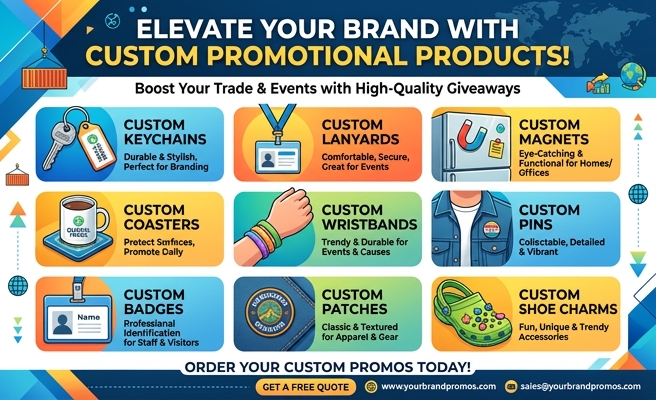
According to Adobe’s 2025 Creative Trends reporting, audiences continue to respond strongly to personalized and identity-driven visuals, especially products that feel collectible and specific rather than generic. That helps explain why contour-cut shapes, niche references, and custom illustration styles remain strong in merchandise design.
Pick the Right Material, Shape, and Finish
A great design can still fail if the production format is wrong. Material determines not just appearance but also cost, weight, print fidelity, and long-term wear.
| Business Scenario | Recommended Material | Why It Fits | Typical Priority |
|---|---|---|---|
| Anime artist selling at conventions | Acrylic with double-sided print | Bright color, low cost, easy die-cut character shapes | Visual impact |
| Auto dealership loyalty giveaway | Soft enamel metal | Premium feel with strong logo presentation | Brand perception |
| School fundraiser | PVC rubber | Durable, kid-friendly, flexible, colorful | Durability and value |
| Boutique coffee brand merchandise | Wood or leatherette | Warm texture, artisan positioning, giftable look | Storytelling |
| Tech event attendee gift | Metal with QR or NFC integration | Combines utility with modern identity access or lead capture | Functionality |
How shape changes perception
Round and rectangular forms are safer for logos and text. Die-cut silhouettes feel more custom and collectible. Oversized shapes can boost shelf appeal but may become annoying in pockets. Thin appendages, sharp corners, or narrow bridges in a shape can create breakage risks, especially in acrylic and wood.
Finish choices that affect value
Glossy finishes bring out color saturation. Matte finishes look more premium and modern in many branding contexts. Glitter, holographic, epoxy dome, translucent layers, and glow effects can all work well, but they should support the brand voice rather than distract from it.
Build the Design Step by Step
Once the concept and format are set, the design process should become methodical. This is where good ideas become manufacturable products rather than rough mockups that collapse under production limits.
A practical design workflow
- Start with one strong concept. Pick a hero idea instead of blending five themes into one crowded layout.
- Set the size early. Most custom keychains land between 1.5 and 2.5 inches. Design at real-world scale, not poster scale.
- Create a simple silhouette. Test whether the outer shape supports the internal artwork.
- Reduce visual noise. Remove tiny lines, unnecessary shadows, and weak secondary details.
- Choose color intentionally. Fewer colors often produce a cleaner result and lower manufacturing complexity.
- Plan the hardware location. The hole placement should feel balanced and structurally safe.
- Mock up the product in use. View it on keys, bags, zippers, and packaging to check visual scale.
- Prepare print-ready or vector files. Outline fonts, clean paths, and verify bleed or cut lines.
According to Deloitte’s 2024 consumer products outlook, buyers continue to place more value on customization and perceived uniqueness, especially in lower-cost impulse categories. That is useful for keychains because even a relatively inexpensive item can feel high-value when it carries custom shape, texture, or personalization.
“A keychain is tiny branding with zero room for confusion. If the design does not read in one second, revise the hierarchy before you revise the colors.”
Common Mistakes and Production Risks
Strong design also means understanding limitations. Production constraints are not creative roadblocks; they are part of the design brief.
Frequent issues to avoid
- Using artwork that is too detailed for the final size
- Choosing colors that shift badly between screen and print
- Placing the keyring hole through important visual elements
- Ignoring copyright or licensing concerns for characters and logos
- Selecting fragile shapes without reinforcement
- Over-investing in finishes that the audience may not pay for
- Approving proofs without checking edge spacing and text legibility
Balancing creativity with practicality
There is a real tradeoff between originality and manufacturability. For instance, wood can look beautiful, but highly detailed facial expressions may lose crispness. Acrylic can carry vibrant illustration, but large unsupported narrow sections may crack over time. Metal looks premium, though gradients and photo detail often require adaptation.
There are also logistical risks. Long lead times, inconsistent color reproduction, and poor packaging can all damage the customer experience. If your launch date matters, build in buffer time for proofing, sampling, and shipping delays.
Real-World Use Cases and Brand Examples
Different industries use custom keychains in very different ways, and the best concepts reflect those realities.
Retail and creator merch
Artists and online sellers benefit from collectible logic. Matching sets, limited-edition drops, seasonal variants, holographic finishes, and character pairings can raise average order value. The design is not just the product; it is part of the collecting experience.
Events and conferences
Event keychains work best when they are tied to a role: attendee badge companion, access token, sponsor collectible, or location-specific souvenir. Generic logos alone rarely carry enough emotional pull unless the event already has a strong identity.
Schools, nonprofits, and sports
These buyers often need broad appeal at controlled cost. Mascot-based PVC, simple slogan tags, and graduation-year commemorative keychains usually perform better than highly niche art because the audience is larger and more mixed.
How Best Patches Approaches Custom Projects
At Best Patches, we have seen firsthand how small adjustments can dramatically improve a project. I remember one campaign for a local sports organization that initially wanted a complicated crest with tiny lettering, multiple gradients, and a narrow shield shape. On screen it looked polished. At keychain scale it looked crowded and hard to read.
We reworked the concept by simplifying the crest, enlarging the mascot face, removing the fine border text, and switching to a more durable PVC format. The result felt bolder, younger, and far more usable. The organization sold through its first batch quickly because the product finally looked like something students actually wanted on their backpacks.
In another case, I worked on a boutique brand launch where the owner wanted a premium giveaway for high-value customers. The first idea leaned trendy but not distinctive. We shifted to a restrained metal keychain with a subtle monogram, matte texture, and cleaner hardware. It cost more per piece, but the retention value was higher and the item matched the brand’s elevated positioning. That is the lesson: the right keychain is not the most decorated one. It is the one aligned with the audience and the purpose.
What Best Patches recommends before production
- Request a digital proof at final scale
- Confirm material thickness and hardware type
- Ask how fine details will translate in the chosen process
- Check packaging if the product is intended for resale
- Review timeline backwards from your launch date
Trends Shaping Keychain Designs in 2026
The 2026 market is moving toward customization that feels more personal, useful, and collectible. People still want visual flair, but they are also becoming more selective about what earns space on their keys or bags.
Design directions gaining traction
Layered acrylic and mixed materials create depth without forcing overly complex artwork.
Micro-batch personalization is growing, especially for names, graduation years, pet art, and location-specific runs.
Eco-aware materials are getting more attention, though buyers still expect them to look polished rather than rustic by default.
Function-plus-style hybrids are becoming more relevant, such as keychains with scanning features, bottle openers, or integrated tags for access and loyalty systems.
Soft nostalgia aesthetics continue to perform well, especially among creator brands and youth audiences, where charm-like accessories overlap with fashion.
These trends matter, but trend-chasing alone is risky. If the design does not fit your customer, your category, and your price point, even the hottest finish becomes wasted budget.
Final Thoughts and Next Actions
The strongest custom keychain design ideas are not random bursts of creativity. They come from clear goals, audience awareness, smart material choices, and disciplined simplification. A small product has no room for weak hierarchy or unnecessary detail. When the concept is clear and production-ready, a keychain can become a surprisingly powerful tool for branding, loyalty, merch sales, and everyday visibility.
Best Patches recommends these next actions:
- Choose one audience and one purpose before you choose any artwork style.
- Create two or three concept directions at actual keychain size and compare readability.
- Request a proof from Best Patches with material recommendations based on your budget and use case.
References
- Promotional Products Association International, 2024 consumer study — Provided insight into product usefulness, retention, and long-term promotional value.
- Adobe Creative Trends, 2025 — Informed the discussion on personalization, collectible visual styles, and identity-driven design preferences.
- Deloitte consumer products outlook, 2024 — Supported the point that buyers continue to value customization and uniqueness in product categories with low entry cost.
FAQ
What is the best material for custom keychains?
-
It depends on your goal. For durability and a polished look, metal is hard to beat. Acrylic is a favorite for artists because it is lightweight, colorful, and budget-friendly. If sustainability matters more, wood or cork can be a strong fit.
How do I choose among custom keychain design ideas for my brand?
-
Start with the purpose. If you need a giveaway, prioritize readability and durability. If you want retail merch, lean into personality and collectibility. The best option is usually the design that matches your audience, budget, and daily use case rather than the most complex artwork.
How thick should an acrylic keychain be?
-
Most acrylic keychains are around 3mm thick. That is usually the sweet spot between durability and comfort. Premium or more substantial designs may go thicker, while budget runs may go thinner if the shape is structurally simple.
Can I sell keychains with copyrighted images?
-
No, not without permission. Selling unlicensed characters, logos, or protected artwork can lead to takedowns or legal issues. Safer alternatives include:
Create original art inspired by a genre, not a copied property
License artwork through approved partnerships
Use public-domain or fully owned assets only
How much does it cost to make custom keychains?
-
Cost depends on material, quantity, finish, and complexity. A rough estimate looks like this:
Acrylic: often around $0.50 to $1.50 each in bulk
PVC or rubber: commonly $0.80 to $2.00 each
Metal: often $1.50 to $3.00 or more
Low-quantity custom runs: higher per-piece due to setup costs
What file format should I use for keychain design?
-
Vector files are usually the safest choice. In most cases, use:
.AI or .SVG for clean vector artwork
.PNG with transparent background for print-ready raster art
At least 300 dpi for raster files
Outlined text to avoid font substitution issues
Do keychain manufacturers have minimum order quantities?
-
Usually, yes. Many suppliers set MOQs between 10 and 50 units, depending on the material and customization level. Some small-batch vendors may allow one-off orders, but the per-piece price is typically much higher.
Can I make keychains without expensive equipment?
-
Yes. Many people start small with basic tools or outsource production. Budget-friendly ways to begin include:
Use free or low-cost design software
Order blank components and assemble at home
Use online manufacturers for printing and cutting
Test a small batch before investing in larger runs