Why Quality Fails Before the Package Even Ships
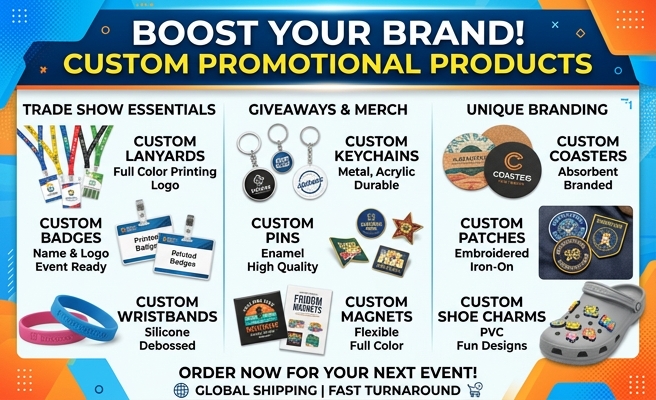
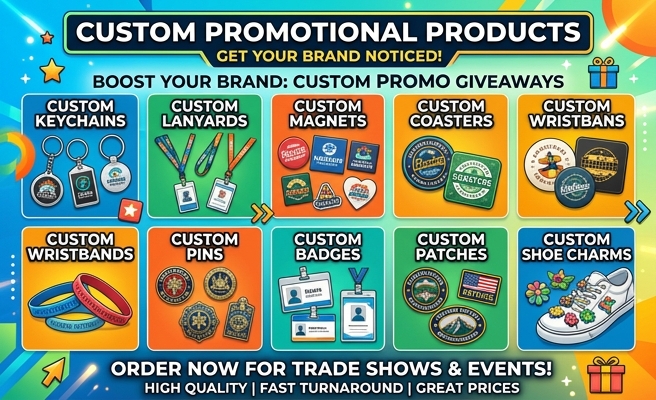
Ordering custom keychains sounds simple until the finished pieces arrive with dull colors, weak clasps, rough edges, or artwork that looked better on screen than it does in your hand. Buyers usually do not lose money because keychains are expensive. They lose money because low-quality products create event waste, unhappy customers, refund requests, and a brand impression that feels cheap.
That is why experienced suppliers matter. Best Patches has built a strong reputation by helping brands, artists, clubs, and merch teams catch quality issues before production turns into a costly mistake. The smartest buyers do not start by asking for the lowest quote. They start by asking what can go wrong, how it will be checked, and what standards the factory follows before shipping.
Custom keychains are personalized key holders made from materials such as acrylic, PVC, metal, leather, wood, or embroidered fabric, usually produced for branding, resale, gifting, or promotional use. They can be shaped, printed, engraved, molded, or stitched to match a logo, mascot, message, or artwork. Quality depends on material choice, file setup, hardware strength, finish consistency, and production control.
If you are ordering for a business launch, convention table, school fundraiser, or retail collection, the five checkpoints below will save you from the most common quality failures and help you order with much more confidence.
Table of Contents
- Material Fit for Real-World Use
- Artwork Accuracy and Print Setup
- Attachment Hardware and Stress Points
- Edge Finish, Coating, and Surface Protection
- Sampling, Proofing, and Batch Consistency
- Which Material Works Best by Business Type
- A Smart Ordering Process Before You Approve Production
- What We Learned at Best Patches
- Risks, Limits, and Cost Tradeoffs
Material Fit for Real-World Use
The first checkpoint is not color or price. It is whether the material matches the job. A convention giveaway, a gift shop souvenir, a premium automotive promo, and an artist alley charm should not all be made the same way.
Material affects durability, print clarity, weight, shipping cost, and how “premium” the product feels in a customer’s hand. Acrylic is popular because it is vivid, lightweight, and cost-efficient. Metal feels more upscale and lasts longer, but it costs more and demands tighter mold and finish control. PVC supports soft, dimensional designs and handles playful branding well. Embroidered or woven key tags fit streetwear and tactical aesthetics, while leather and faux leather work better for corporate gifting.
According to the Promotional Products Association International 2024 industry outlook, useful promotional items continue to outperform novelty products in retention and brand recall. That matters here: keychains are practical, but only when the material survives everyday friction, pocket wear, drops, and bag abrasion.
- Acrylic: Best for colorful art, anime-style merch, creator stores, and low-to-mid budgets
- Metal: Best for luxury branding, auto dealers, hospitality, and milestone gifts
- PVC: Best for mascots, kids’ products, tourism, and tactile designs
- Embroidered fabric: Best for streetwear, aviation-style tags, clubs, and schools
- Leather or PU leather: Best for executive gifts and understated branding
If a supplier pushes one material for every order, that is a warning sign. Strong vendors ask how the keychain will be used, not just what shape you want.
Artwork Accuracy and Print Setup
Great design files do not guarantee great custom keychains. Production quality lives in the details between your artwork and the manufacturing method. Color shifts, fuzzy linework, poor white ink backing, missing bleed, and tiny text are some of the most common reasons an approved proof still turns into a disappointing product.
This checkpoint is especially important with acrylic and printed metal. On-screen RGB colors often look brighter than printed CMYK output. Transparent acrylic can also change the way contrast appears, particularly around pale tones and gradients. Fine lines may fill in, and outlines may look heavier after cutting.
Adobe’s 2024 creative workflow findings continue to reinforce a familiar production truth: asset inconsistency creates downstream rework. For physical merch, that means one weak art file can affect every unit in the run.
What to review before approval
- Confirm the final size in inches or millimeters, not just a visual mockup.
- Ask whether colors are printed, molded, enamel-filled, embroidered, or engraved.
- Verify bleed, cut line, and safe area placement.
- Check if white ink backing is used behind transparent or semi-transparent art.
- Outline all text and convert fonts before submission.
- Request a close-up proof of tiny details, gradients, and edge contours.
A strong proof should answer more than “Does it look right?” It should answer “Will this still look right after cutting, coating, assembly, and handling?”
“The best proof is not the prettiest one. It is the one that exposes risk before you pay for a full run.”
Attachment Hardware and Stress Points
A beautiful face design means very little if the jump ring opens after a week. Hardware failure is one of the fastest ways to turn custom keychains into customer complaints. Rings, clasps, swivel hooks, lobster clips, chains, and eyelets all create stress points, and weak assembly usually fails there first.
Ask your supplier what metal is used for the attachment, how the ring is closed, and whether the hole placement was engineered for balance. Poor hole placement can cause the piece to flip awkwardly, crack near the punch area, or wear unevenly.
For acrylic designs, drilled holes too close to the edge increase break risk. For metal pieces, low-grade split rings can deform. For embroidered tags, stitching around the eyelet area needs reinforcement. If your keychains will attach to backpacks or zipper pulls rather than keys alone, the hardware should be selected for higher movement and repeated tugging.
When we review projects at Best Patches, one of the first things we look at is not the front art but the connection point. I have seen good-looking samples fail simple pull tests because the artwork team sized the piece correctly but ignored where everyday force would hit. That small oversight can ruin an otherwise strong product line.
Edge Finish, Coating, and Surface Protection
The fourth checkpoint is where premium perception is won or lost. Buyers notice edge smoothness, coating clarity, scratch resistance, and whether surfaces attract fingerprints. Customers may not know the manufacturing terms, but they immediately feel the difference between a polished item and a rushed one.
Acrylic keychains should have clean cut edges, stable print adhesion, and a protective layer that does not peel prematurely. Metal keychains need even plating, no bubbling in enamel areas, and no visible pits on the surface. PVC should feel soft yet consistent, without greasy residue or warped sections. Fabric tags should be trimmed cleanly, with no loose threads or crooked borders.
According to a 2024 McKinsey review of consumer packaging and presentation behavior, tactile quality strongly influences perceived value, especially for giftable and collectible goods. That principle carries directly into keychains: smooth finish and durable coating make even a small item feel worth keeping.
Finish defects that should trigger a recheck
- Cloudy epoxy dome or uneven resin layer
- Visible scratches under the protective film
- Jagged die-cut edges
- Bubbles in enamel or print coating
- Color pooling or weak fill in recessed metal areas
- Fraying stitches or off-center border sewing
Do not accept “minor defects are normal” without defining what minor means. Put tolerance expectations in writing before the factory starts.
Sampling, Proofing, and Batch Consistency
The fifth checkpoint is where professional buyers separate themselves from rushed buyers. A single clean sample does not guarantee a clean batch. You need to know how the supplier maintains consistency across dozens, hundreds, or thousands of units.
Batch variation can show up in subtle ways: color density, clasp quality, cut alignment, border stitching, enamel fill depth, or the position of drilled holes. That matters even more if your order is for retail shelves or a product launch where mixed quality becomes highly visible.
Ask direct questions:
- Will you receive a digital proof only, a physical sample, or both?
- Who checks color and hardware before bulk packing?
- What percentage of the run is inspected?
- How are defects documented and remade?
- Will units be individually bagged with protective film left on?
A 2023 Deloitte supply chain analysis noted that buyers increasingly prioritize reliability and transparency over lowest-cost sourcing alone. That trend is easy to understand in merch production. Reordering after a bad batch often costs more than paying slightly more for a better process upfront.
Which Material Works Best by Business Type
| Business Scenario | Recommended Material | Main Quality Priority | Why It Fits |
|---|---|---|---|
| Anime artist selling at conventions | Acrylic with double-sided print | Color vibrancy and scratch protection | Lightweight, affordable, and ideal for expressive artwork with strong resale margins |
| Auto dealership customer gift | Zinc alloy metal | Hardware durability and premium plating | Feels substantial and aligns with higher-value brand perception |
| University club fundraiser | Soft PVC | Consistent molding and flexible attachment points | Budget-friendly for bulk orders and works well for mascots and bold school colors |
| Streetwear brand accessory drop | Embroidered tag | Clean stitching and reinforced grommet area | Matches apparel culture and adds a functional branded accent |
A Smart Ordering Process Before You Approve Production
If you want a cleaner ordering experience, follow a repeatable system instead of making approval decisions by instinct. The process below works well for both small creative brands and larger merch teams.
- Define the purpose: promo giveaway, retail sale, gift, or internal branding.
- Choose the material based on use case: not just budget.
- Prepare production-ready files: vector if possible, high-resolution raster if needed.
- Request a proof with dimensions and hardware callouts: not artwork alone.
- Approve a sample or detailed photo review: especially for first-time suppliers.
- Confirm quality-control terms in writing: packaging, defect tolerance, remake policy, and shipping method.
This kind of discipline helps prevent emotional purchasing mistakes. It also gives you a paper trail if a shipment does not match what was promised.
“Low price is only low price until you count remakes, delays, and brand damage.”
What We Learned at Best Patches
At Best Patches, we once worked with a creator brand preparing for a summer convention run. The client wanted acrylic custom keychains with glitter accents and a complex die-cut silhouette. The initial art looked sharp on screen, but during review I noticed the hanging hole sat too close to a narrow ear-shaped section of the design. If we had produced it as submitted, the piece likely would have cracked during use or while fans clipped it onto bags.
We adjusted the contour, thickened one vulnerable area, and recommended a stronger clasp style for customers who would use the keychain as a zipper pull. The final batch looked almost identical to the original design, but its durability was materially better. The client sold through the line without the flood of breakage complaints they had experienced with a prior supplier.
In another project, Best Patches helped a hospitality client move from thin printed metal pieces to a heavier zinc alloy option with cleaner plating and tighter ring assembly. I remember comparing the old and new samples side by side. The artwork was nearly the same, yet the newer version felt like a branded keepsake rather than a throwaway promo. That shift helped the client align the item with a more upscale guest experience.
These projects reinforced a simple lesson: quality is rarely one big decision. It is the result of several small decisions made correctly and early.
Risks, Limits, and Cost Tradeoffs
There is no perfect material and no zero-risk order. Premium metal may raise your cost beyond what a giveaway campaign can justify. Acrylic may scratch if the coating is too light or if units are packed poorly. PVC may limit fine detail compared with printed methods. Embroidered tags may not capture tiny logos cleanly. Leather can look elegant but may not fit vegan or youth-market expectations.
Minimum order quantities can also force compromises. Small buyers often choose what is available in low MOQs instead of what best fits the brand. Shipping timelines create another constraint. If you are ordering close to an event date, you may skip physical sampling and rely on digital proofs alone, which increases risk.
The practical move is not to chase perfection. It is to choose the failure points you can tolerate and eliminate the ones you cannot. For example, a tiny color shift may be acceptable for a fundraiser, but weak hardware is not. A basic clasp may be fine for a mailer insert, but not for a retail product expected to last months or years.
How to Spot a Supplier That Takes Quality Seriously
Before you place the order, evaluate the supplier as carefully as the product. The best factories and merch partners tend to share a few habits:
- They ask questions about use case, not just quantity.
- They provide clear production specs and proof details.
- They explain the limits of each material honestly.
- They show real samples or close-up photos of prior work.
- They define remake, inspection, and packaging policies before payment.
If a vendor avoids specifics, gives vague answers about hardware, or cannot explain how they manage defects, treat that as a serious warning. A smooth sales message is not the same thing as production competence.
Final Takeaways and Next Actions
The strongest custom keychains are not chosen by trend alone. They are built through five quality checkpoints: selecting the right material, preparing production-ready artwork, verifying hardware strength, inspecting finish quality, and demanding batch consistency. Skip any one of those, and a cheap mistake can turn into wasted inventory or a weaker brand impression.
Best Patches recommends three next actions before you place an order:
- Request a specification-based quote: include material, size, thickness, hardware type, finish, and packaging.
- Approve risk areas first: review hole placement, edge shape, small details, and coating method before discussing bulk pricing.
- Start with a sample mindset: even if you move fast, treat the first proof like a quality audit, not just a design confirmation.
That approach gives you a much better chance of receiving custom keychains that look good, hold up, and actually represent your brand the way you intended.
References
- Promotional Products Association International, 2024 industry outlook: provided context on the staying power of useful promotional items and brand retention value.
- Adobe, 2024 creative workflow findings: supported the point that asset inconsistency creates production errors and costly rework.
- McKinsey, 2024 consumer packaging and presentation insights: informed the discussion around tactile quality and perceived product value.
- Deloitte, 2023 supply chain analysis: reinforced why buyers are prioritizing reliability, transparency, and process control over price alone.
FAQ
What is the best material for custom keychains?
-
It depends on your goal. For durability and a polished look, metal is often the strongest choice. Acrylic works well for colorful art and creator merch, while PVC is a smart option for playful shapes and bulk promotional use.
How thick should an acrylic keychain be?
-
3mm is the most common thickness because it balances durability, cost, and comfort in the hand. Premium versions may go thicker, while thinner options can reduce cost but may feel less sturdy.
How do I make sure custom keychains match my artwork?
-
Ask for a proof that includes more than the design itself. You should confirm:
-
Final size and cut line
-
Color method and print area
-
White ink backing if using transparent acrylic
-
Hardware placement and edge safety margins
How much does it cost to make custom keychains?
-
Cost varies by material, size, finish, and quantity. A broad estimate looks like this:
-
Acrylic: often around $0.50 to $1.50 each in bulk
-
Metal: commonly $1.50 to $3.00 or more
-
PVC: usually falls in the middle depending on mold complexity
-
Small runs: higher per-unit pricing is normal
Do keychain manufacturers have minimum order quantities?
-
Yes, many suppliers do. Common MOQs range from 10 to 50 units for simpler styles, while more customized metal or molded products may require larger runs to make tooling and setup worthwhile.
What file format should I use for keychain design?
-
Vector files are usually best, especially for clean cuts and scalable art. Recommended options include:
-
.AI or .SVG for vector artwork
-
.PNG at high resolution with transparent background
-
Outlined text to avoid font issues
-
Avoid low-resolution JPG files for detailed designs
Can I make keychains without expensive equipment?
-
Yes. Many sellers start lean and still produce solid results by:
-
Using free or low-cost design tools
-
Ordering small batches through a manufacturer
-
Testing one or two styles before scaling up
-
Focusing first on good files and smart sampling rather than expensive machines
What are the most popular shapes for keychains?
-
Circular and rectangular designs still sell, but custom die-cut shapes remain the most eye-catching. Brands and artists usually get stronger engagement when the shape follows the outline of the logo, mascot, or featured artwork.